



In scenarios such as computer rooms and laboratories, once anti-static flooring develops cracks or bulges, it not only affects user experience but may also lead to equipment malfunctions and safety hazards such as static-induced fires. Combining industry practices with Zhongtian's technical experience in anti-static flooring, the root causes of these issues can be precisely analyzed from three aspects: environmental control, material selection, and quality standards. Imbalanced environmental temperature and humidity are the primary triggers.
National regulations clearly stipulate that the usage environment for anti-static flooring must maintain a temperature of 23°C ±2°C and humidity of 45% RH~55% RH. Deviating from these ranges can cause the flooring substrate and surface layers to crack due to thermal expansion and contraction or moisture-related deformation. The differences between the north and south of China are particularly notable: in the dry northern winter, if humidifiers are not promptly used, HPL melamine surfaces may shrink and peel due to moisture loss; in the humid southern summer, if dehumidification is delayed, substrate swelling may cause bulges, both of which compromise the structural stability of the flooring.
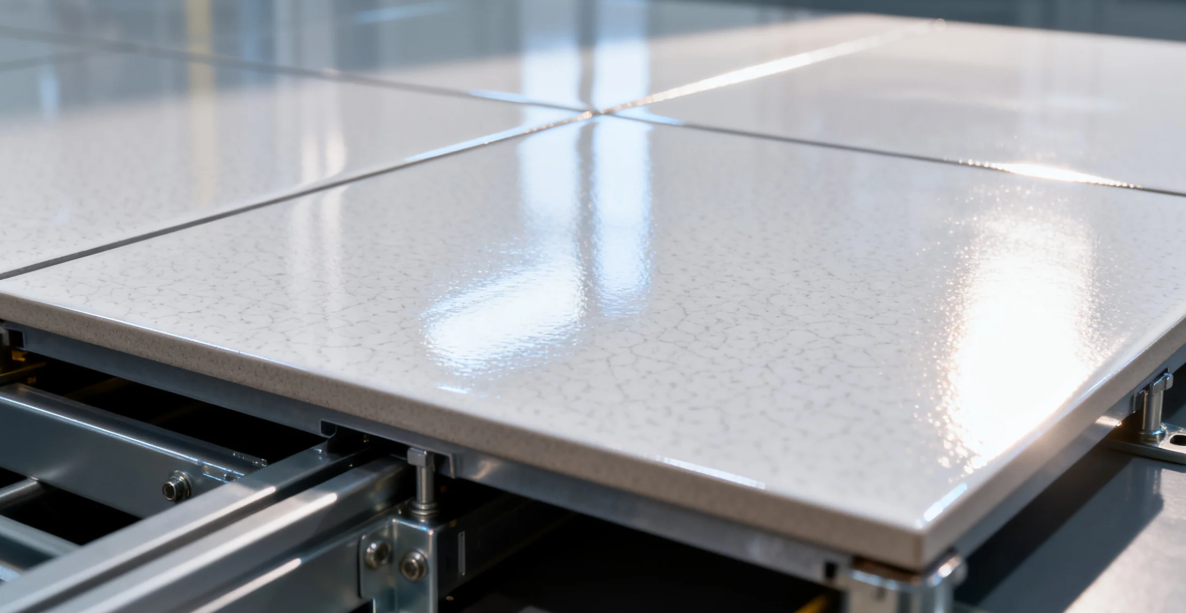
Insufficient material adaptability is also key. Climate differences between the north and south necessitate adapting material choices to local conditions: in the humid south, HPL and PVC surfaced flooring can be selected for their moisture resistance; in the dry north with large temperature fluctuations, ceramic anti-static flooring or high-durability HPL flooring is more suitable — ceramic materials have high hardness and strong thermal stability, while high-durability HPL surfaces resist shrinkage better, effectively reducing the risk of cracking in dry climates. Choosing materials that do not match local climate significantly increases the likelihood of cracking and bulging.
Substandard quality directly causes problems. Some inferior floors fail to meet national standards; poor surface adhesion or insufficient substrate strength can lead to cracking even under proper environmental control. More seriously, if HPL surfaces crack and are not replaced in time, static electricity cannot be properly dissipated, potentially paralyzing data center equipment at a minimum or causing fires due to static accumulation at worst, with unimaginable consequences.
Once these root causes are understood, targeted responses are sufficient: strictly control environmental temperature and humidity, select suitable materials as needed, choose products that meet standards, and conduct regular inspections. These measures can effectively prevent cracks and bulges in anti-static flooring, ensuring safe and stable operation of the site.